


https://www.ahg36.com/modern-art-painting/late-winter-day-by-artist-wilhelm-gegerfelt-278301/
Value the_image_id is: Value selected_oprava is: Frame ID selected_frame_id is: original_image_id is: Path: /home/admin/web/ahg36.com/public_html/
tmp_wall_price:
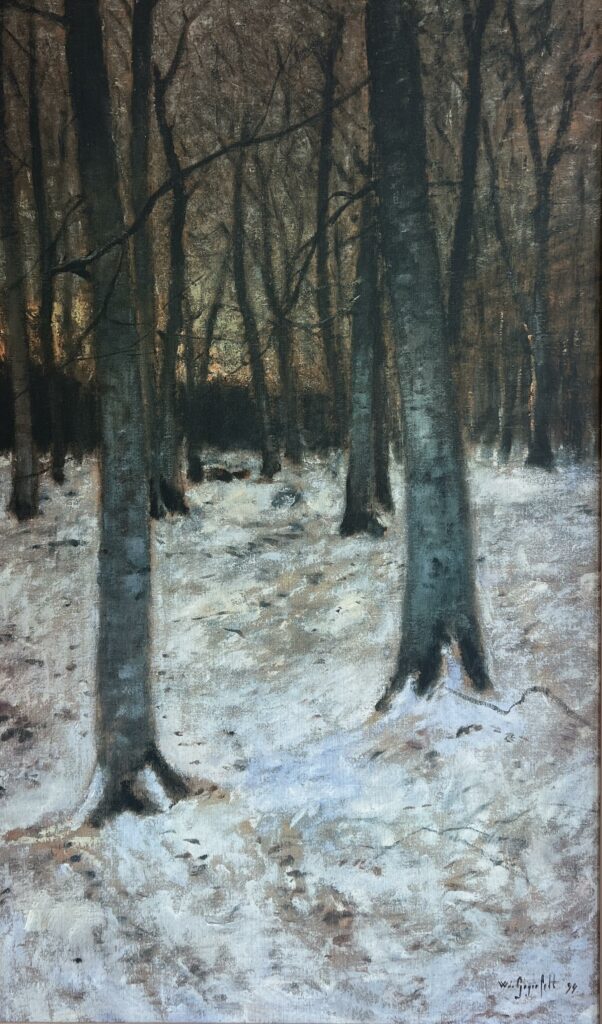
In this evocative woodland scene, the artist transports us into a tranquil forest under the muted light of a late winter's afternoon. The play of light and shadow among the elegant trunks, rendered in cool grays and subtle browns, creates a sense of serene stillness. The snow-covered forest floor is delicately brushed, hinting at recent footprints, inviting the viewer to wander silently through this frozen tableau.
The composition, balanced yet dynamic, captures the essence of nature's quiet majesty. This work whispers tales of Impressionistic influences, where light and atmosphere dance harmoniously, leaving the viewer both contemplative and enchanted. A masterstroke of introspective elegance.
Can a painting come to life? Can time stop and flow at the same time? Discover the mysterious 3D animation inspired by this extraordinary work - where the line between art and digital reality blurs in magical movement.
Do you dare to look beyond the framework of reality?
About the author
Motif: "Late winter day" (Original in private possession.)
GEGERFELT, WILHELM von, born 1844 9/11 in Gothenburg, died 1920 2/4 in Torekov. Landscape painter and etcher. G received his first education in 1861-63 as an apprentice painter in Copenhagen, where he also followed the teaching at the Danish Academy of Fine Arts. From 1863 G studied at the Royal Academy of Fine Arts in Stockholm until 1867, when he applied to Düsseldorf from 1867 to 1872. From there he regularly participated in the Royal Academy of Fine Arts exhibitions in Stockholm, received the Royal Medal in landscape painting in 1871 and became agré at the academy the following year. In 1872 G settled in Paris and led an itinerant life during the next decade, travelling in Normandy and Brittany, Holland and Italy. However, he often went to Sweden and Denmark in the summer, where in 1874 he was the first Swede to join the Danish artists' colony in Skagen. From 1874 G successfully participated in the Salon exhibitions in Paris; in 1885 he joined the opponents and the following year became a member of the Swedish Artists' Association but in 1891 he transferred to the more moderate association Svenska Konstnärernas förening. During the latter half of the 1880s G was occasionally resident in Uppsala, where in 1885-86 he was a teacher for the young Prince Eugen. In 1888 G settled in his hometown of Gothenburg but went to Halland's Väderö and Torekov in the summer, where he lived for the last decades of his life. G's extensive production. ranges from French landscape paintings, Dutch and Venetian canal motifs to coastal pictures from Skagen and winter moods in Sweden. Unfortunately, large parts of his production are now abroad, but he is also well represented at the National Museum, Waldemarsudde and Gothenburg Art Museum, among others.